
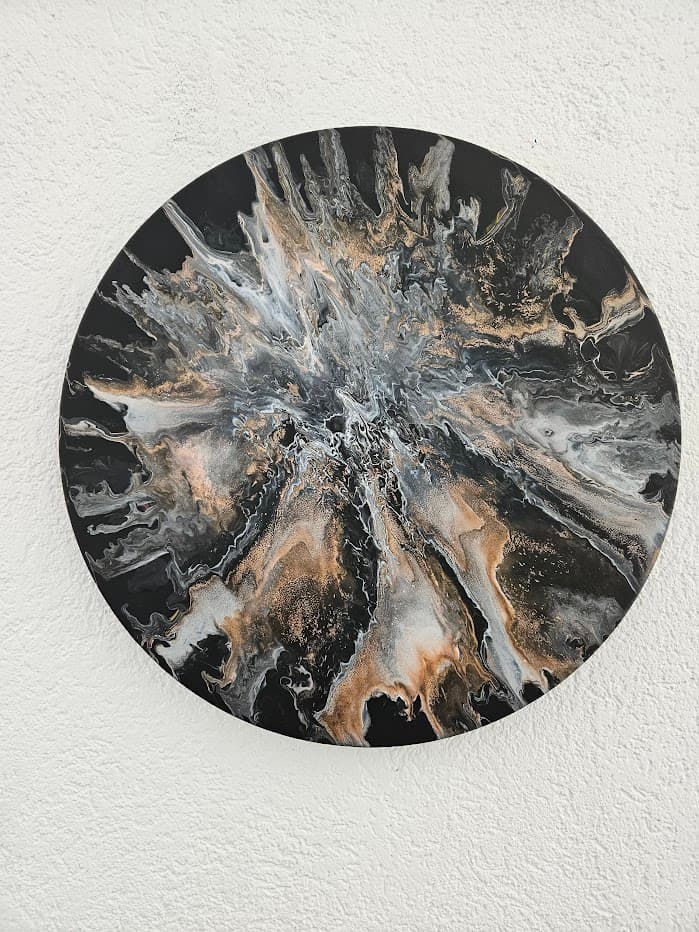
An acrylic painting can begin with a splash of colour, a mood or a vague idea. What it becomes often only emerges as the painting progresses: colours meet, shapes change and new details appear. A look at this creative journey can help you see a finished work in a new light.
It starts with an idea
Before paint reaches the canvas, you need a direction – but not necessarily a fully planned design. Perhaps warm reds and oranges take centre stage, or perhaps the painting is meant to feel calm and fluid. With a work such as Lava in red and gold, the title alone brings a vibrant world of colour to mind; with abstract art, you can let your imagination run free.
Creating an effect, layer by layer
Now the painting itself begins. Acrylic paint can be applied at different thicknesses, making it ideal for creating varied surfaces: a transparent layer can feel light, while a more opaque one adds bold accents. A painting often develops over several stages, with each new layer complementing, changing or partly covering the one beneath it.
Mixed-media works are a particular invitation to experiment. Different materials and techniques can be combined so that a work makes an impact not only through its colours, but also through its surface. The Red river landscape with copper accents shows, even in its name, how colour and a metallic accent can come together to create a distinctive mood.
Details give a work its character
Once the large areas of colour are in place, attention turns to how the individual details work together. Where is more contrast needed? Which line guides the eye onwards, and where can the surface deliberately remain open? Such decisions cannot always be made in advance – they emerge through a dialogue with the painting.
In Pebble path in mother-of-pearl colours, the combination of a path, pebbles and shimmering tones evokes something quite different from a work in fiery colours. The example shows how varied acrylic and mixed-media paintings can be: sometimes lively and intense, sometimes gentle and understated. In the end, what matters is that the individual elements come together as a whole.
From the painting process to the finished work
A finished painting is more than the sum of its layers of colour. It holds decisions, spontaneous turns and an eye for detail. With handcrafted art in particular, this personal journey is part of what makes each work special.
When looking at an acrylic painting, you can take your time and let your eyes wander across its colours, shapes and textures. You may discover something that was hidden at first glance. In this way, the creative process continues in your own experience – long after the final brushstroke has been made.

